The WWF is run at a local level by the following offices...
- WWF Global
- Adria
- Argentina
- Armenia
- AsiaPacific
- Australia
- Austria
- Azerbaijan
- Belgium
- Bhutan
- Bolivia
- Borneo
- Brazil
- Bulgaria
- Cambodia
- Cameroon
- Canada
- Caucasus
- Central African Republic
- Central America
- Central Asia
- Chile
- China
- Colombia
- Croatia
- Democratic Republic of the Congo
- Denmark
- Ecuador
- European Policy Office
- Finland
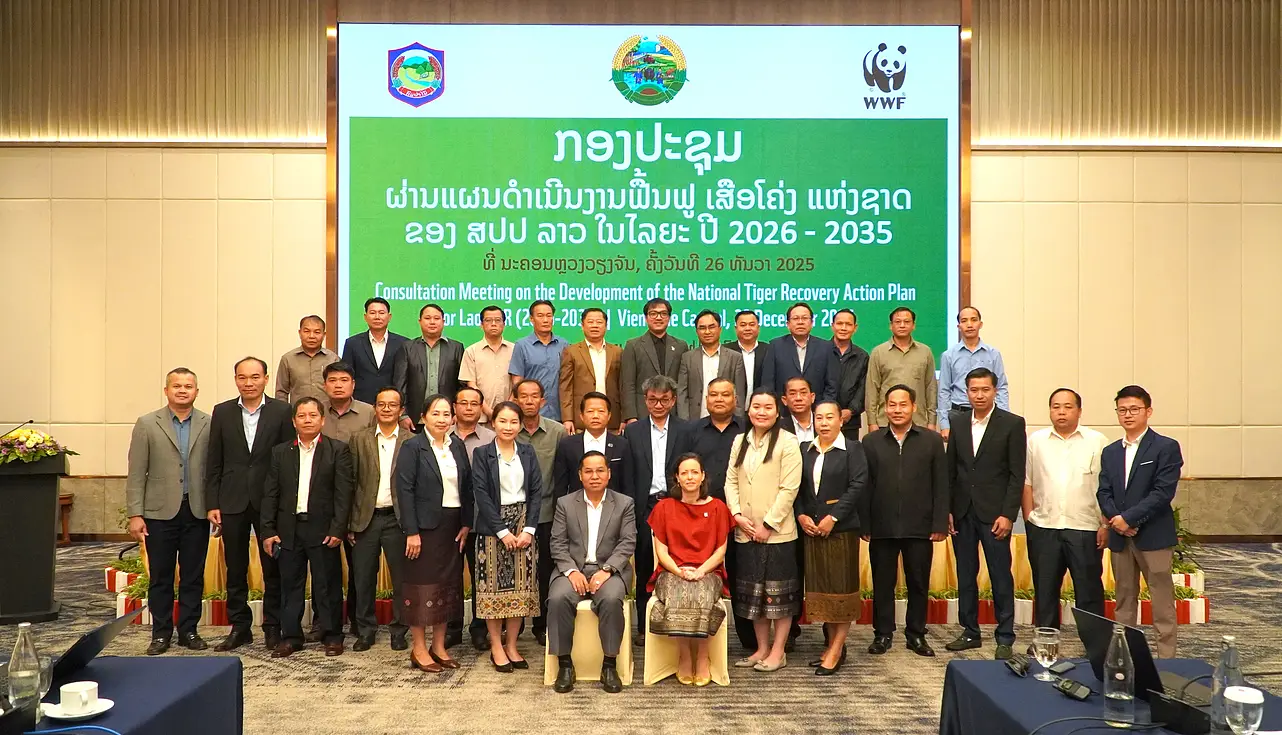
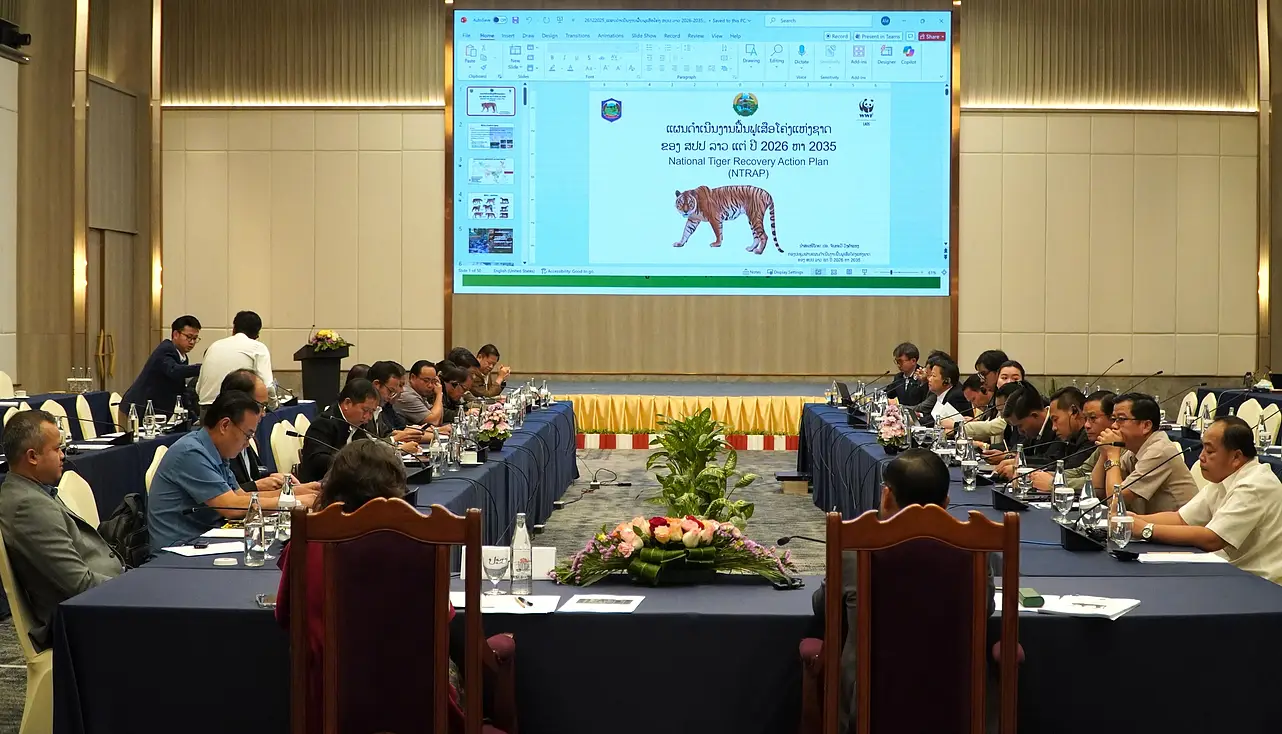
The Government of Lao PDR has approved the National Tiger Recovery Action Plan (NTRAP) 2026–2035, setting out a 10-year national roadmap to help create the conditions for future tiger recovery in the country.
Signed by the Minister of Agriculture and Environment in March 2026, the plan identifies priority landscapes, key actions and an implementation framework to guide long-term recovery efforts. Implementation will be led by the Department of Forestry, in partnership with conservation organizations in Laos, including WWF.
The plan’s approval offers renewed hope for future tiger recovery in Laos, where the last confirmed wild tiger record was in 2013.
The NTRAP also includes a roadmap for closing captive tiger facilities in Lao PDR, particularly those associated with the breeding or keeping of tigers in captivity for commercial trade, in line with the country’s commitment to close tiger farms and follow relevant international recommendations.
The approval of the NTRAP comes at a critical time, bringing together national ownership, technical guidance, and a practical framework for long-term action. WWF-Laos provided key technical and financial support throughout this process.
The new NTRAP also builds on lessons from the first National Tiger Action Plan. While Lao PDR made progress over the past decade in legal reform, protected area management, SMART patrolling, and community-based conservation, major gaps remained. Poaching and snaring continued, prey populations declined, habitat fragmentation increased in some landscapes, and enforcement outside protected areas remained limited.
The new plan responds to these lessons with a stronger recovery focus, clearer priorities, and greater emphasis on implementation, financing, coordination, and long-term technical support.

Priority Landscapes and What Success Will Require
The NTRAP identifies Nam Poui National Protected Area as Lao PDR’s ‘Priority 1’ landscape for supporting future tiger recovery. Nam Et-Phou Louey, Nakai-Nam Theun, and Xe Pian are recognized as ‘Priority 2’ landscapes for longer-term recovery efforts.
Nam Poui National Protected Area is recognized as Lao PDR’s Priority 1 landscape and the main focus for supporting the potential natural return of tigers from neighbouring source populations, particularly from Thailand. With its strategic location, habitat connectivity, and long-term potential for tiger dispersal, Nam Poui is considered the country’s most feasible landscape for supporting the future natural return of wild tigers.
Nam Et-Phou Louey, Nakai-Nam Theun, and Xe Pian National Parks are recognized as Priority 2 landscapes. These landscapes remain important to Lao PDR’s longer-term tiger recovery strategy, but will require continued restoration, including prey recovery, stronger protection, and improved ecological connectivity, to strengthen their long-term potential to support tiger recovery.
To support implementation, the NTRAP focuses on the key conditions needed for tiger recovery: secure habitats, restored prey populations, stronger law enforcement, effective monitoring, community support, sustainable financing, and improved coordination with neighbouring countries.
Under WWF-Laos’ new five-year Strategic Plan, tigers are identified as a priority species. In alignment with the government-led NTRAP, WWF-Laos is committed to supporting implementation of the Action Plan, drawing on technical expertise from across the wider WWF Network, including WWF’s Tigers Alive Initiative. This support will focus on the priority landscapes identified in the NTRAP.
Successful implementation of the NTRAP will require sustained collaboration among government agencies, provincial and district authorities, protected area management units, communities, conservation organizations, research institutions and development partners.
The plan recognizes that coordinated action and long-term commitment are essential to restoring tiger landscapes and biodiversity in Laos. Through this shared effort, Laos has an opportunity to support future tiger recovery while strengthening biodiversity conservation, forest governance, and regional cooperation.
Note: The tiger images used on this webpage are illustrative and were photographed outside Lao PDR.