The WWF is run at a local level by the following offices...
- WWF Global
- Adria
- Argentina
- Armenia
- AsiaPacific
- Australia
- Austria
- Azerbaijan
- Belgium
- Bhutan
- Bolivia
- Borneo
- Brazil
- Bulgaria
- Cambodia
- Cameroon
- Canada
- Caucasus
- Central African Republic
- Central America
- Central Asia
- Chile
- China
- Colombia
- Croatia
- Democratic Republic of the Congo
- Denmark
- Ecuador
- European Policy Office
- Finland
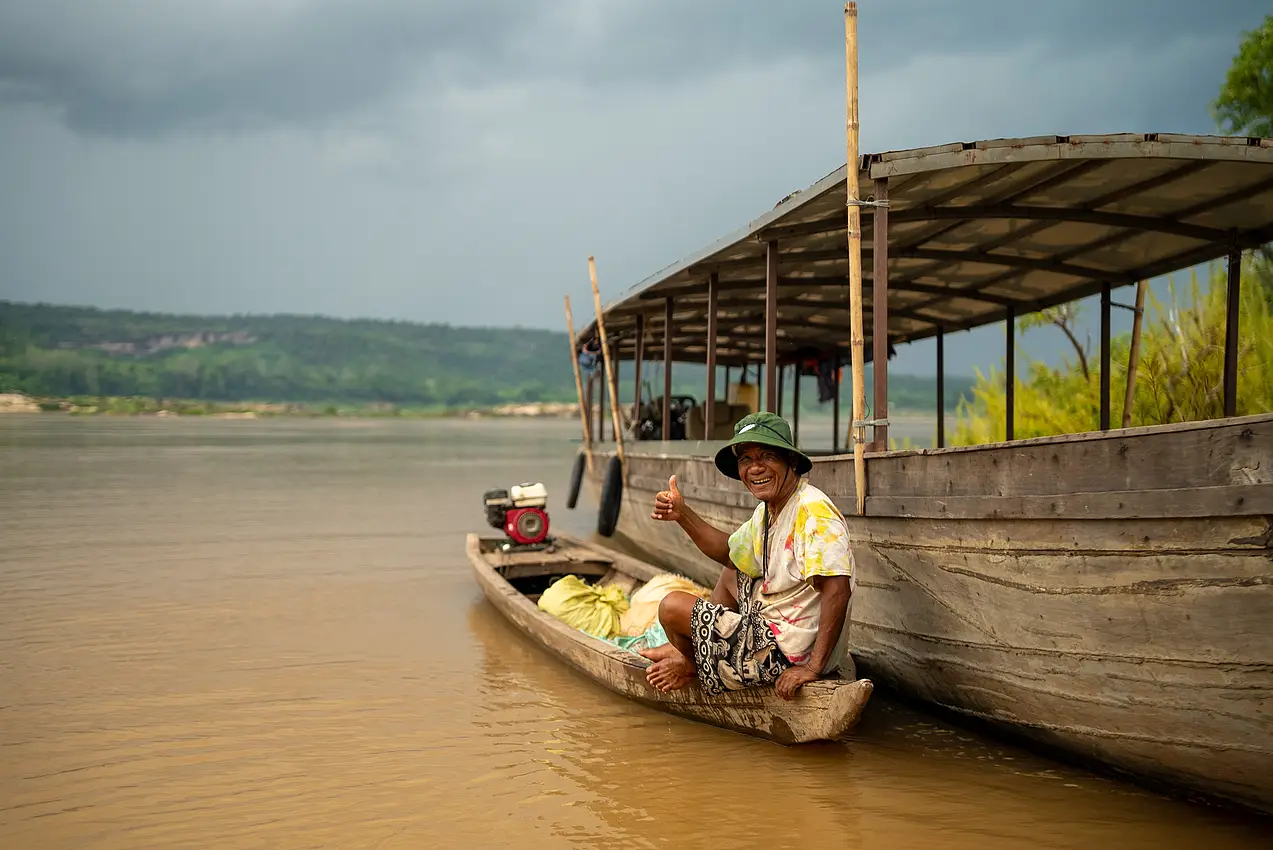
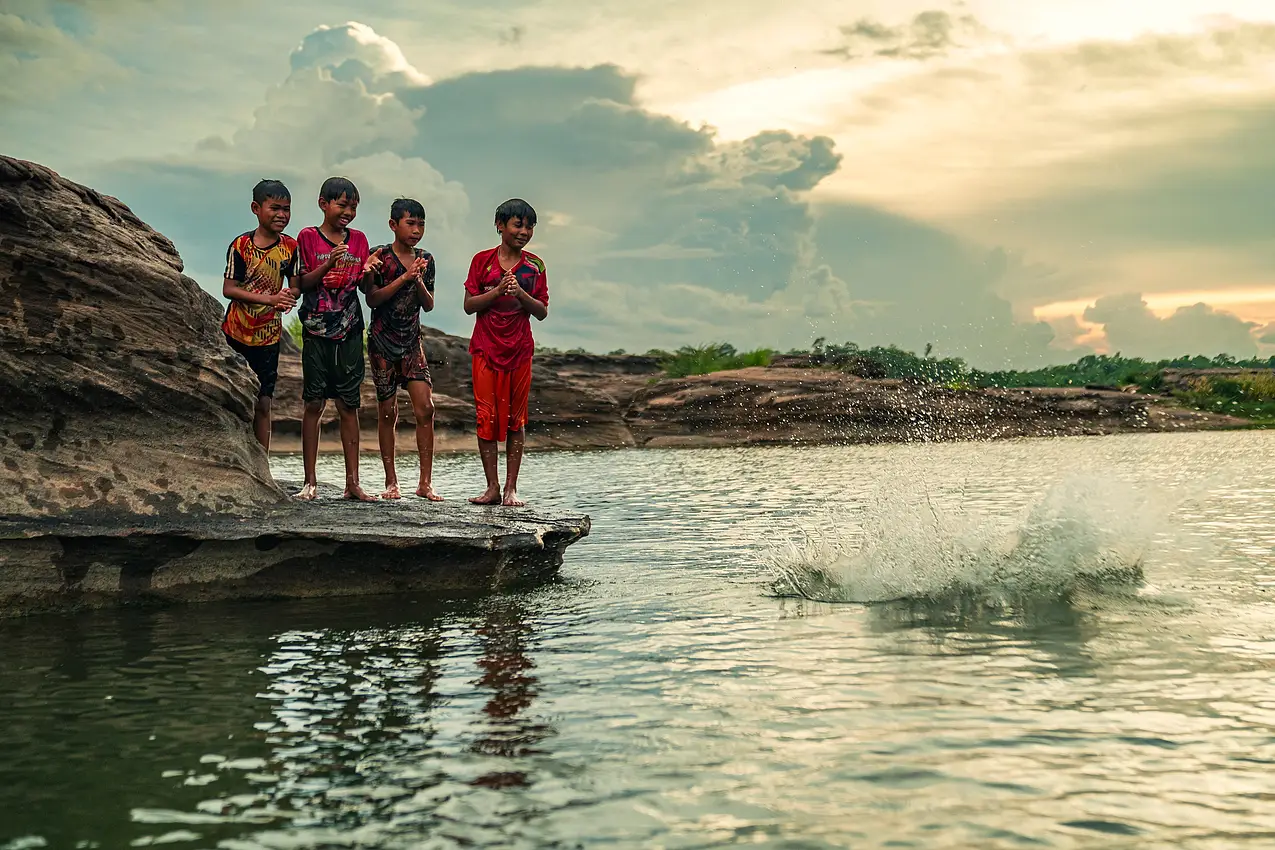
In Khamtue village, where the Mekong River flows between forests and communities on both sides of the Lao-Thai border, the river does more than shape the landscape. It shapes the livelihoods, traditions and everyday routines of people living along both banks.
For Ms. Khan Khounlardlasy, the Mekong has never been just a river. Born and raised in Khamtue village in Khongxedon district, Salavan province, in the south of Laos, she has spent her life close to the river and surrounding forests. Together, they have provided food for her family, additional income, and resources that support life in the village.
At 48, Ms. Khan is a mother of three. Her husband takes construction work when it is available, while the family also relies on agriculture and raising livestock. Like many households in Khamtue, they depend on several sources of food and income, with the Mekong River remaining an important part of daily life.
Today, Ms. Khan is not only someone whose family depends on the Mekong. She is also helping to protect it.
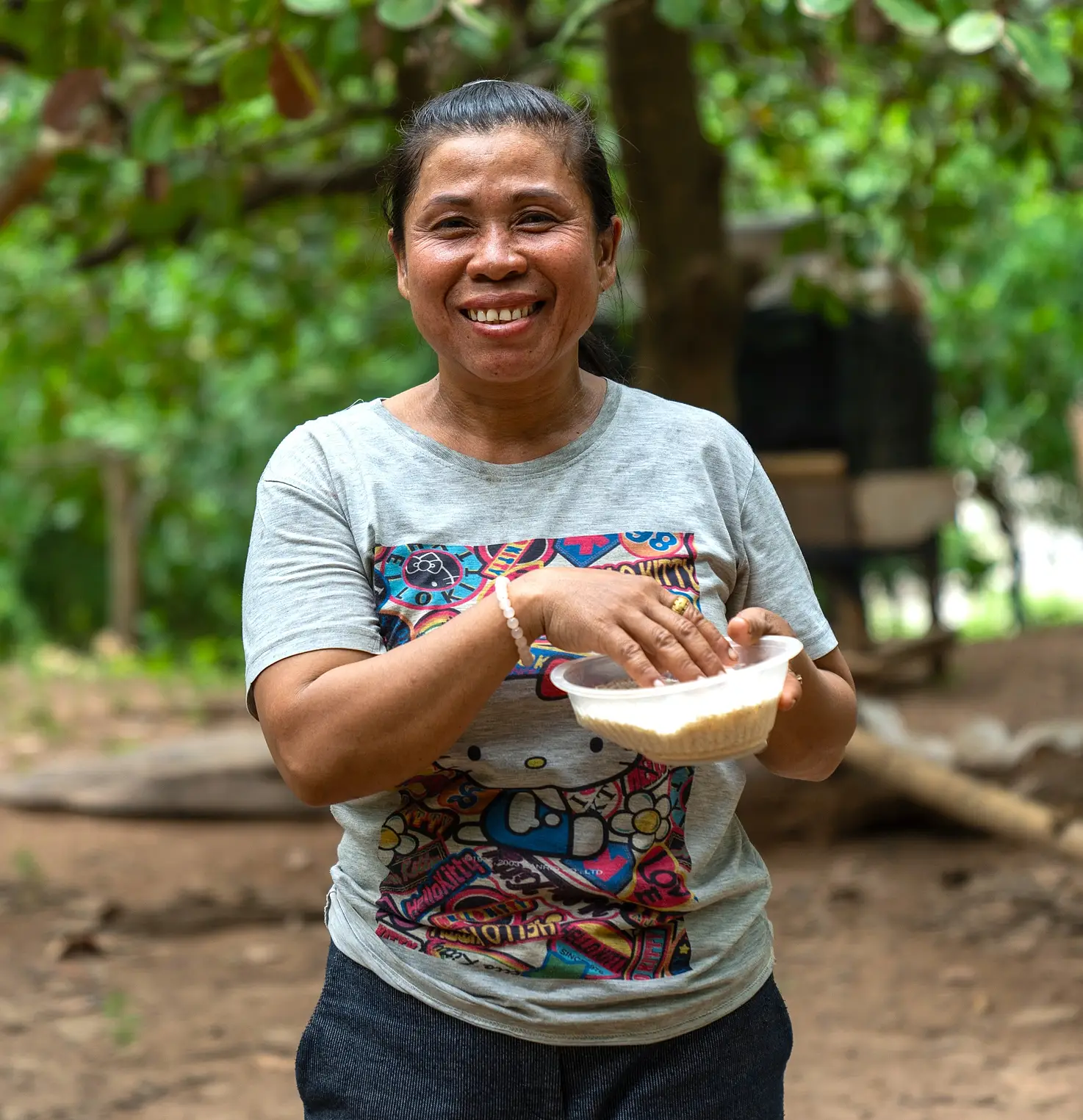
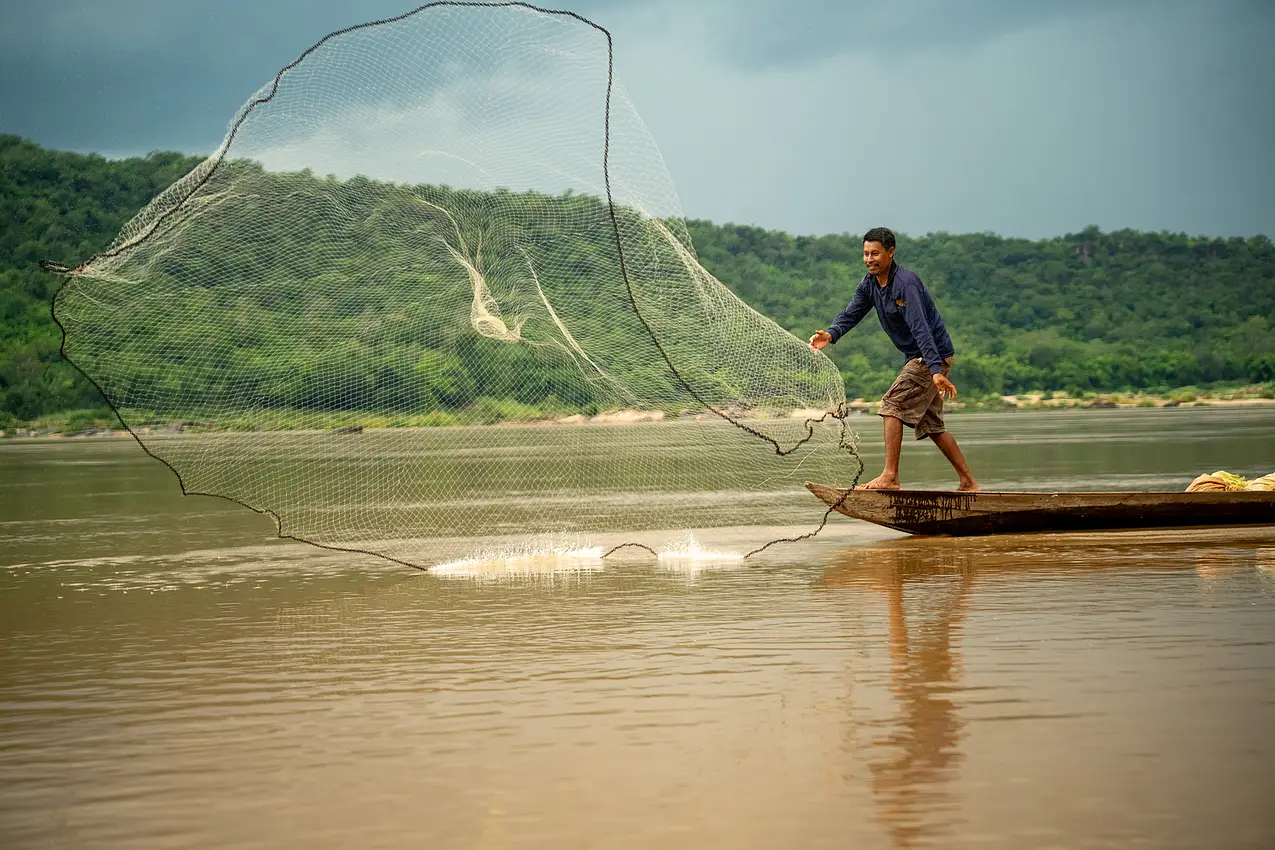
Ms. Khan says fishing remains important for many households in Khamtue.
“Not every family goes fishing these days, as many people also take on other work,” she said. “But fisheries remain an important additional source of food and income for our community, including my family.”
Khamtue village is home to around 120 households and lies along a stretch of the Mekong River between Pha Taem National Park in Thailand and Phou Xieng Thong National Protected Area in Laos. The area forms part of an important freshwater landscape, with Phou Xieng Thong recently recognized as an ASEAN Heritage Park.
Getting to Khamtue takes around two hours by car from the nearest town, along rough and rocky roads through mountainous areas. During the rainy season, the journey becomes even more difficult, and at times the road may be impassable.
Because of its remote location, families cannot easily rely on markets, regular jobs or outside services. Instead, many households depend closely on the natural resources around them, including the Mekong River.
For many households in Khamtue, agriculture and livestock are the main sources of income, while fishing remains an important source of food and, for some families, additional income. Nearby forests also provide non-timber forest products for household use.
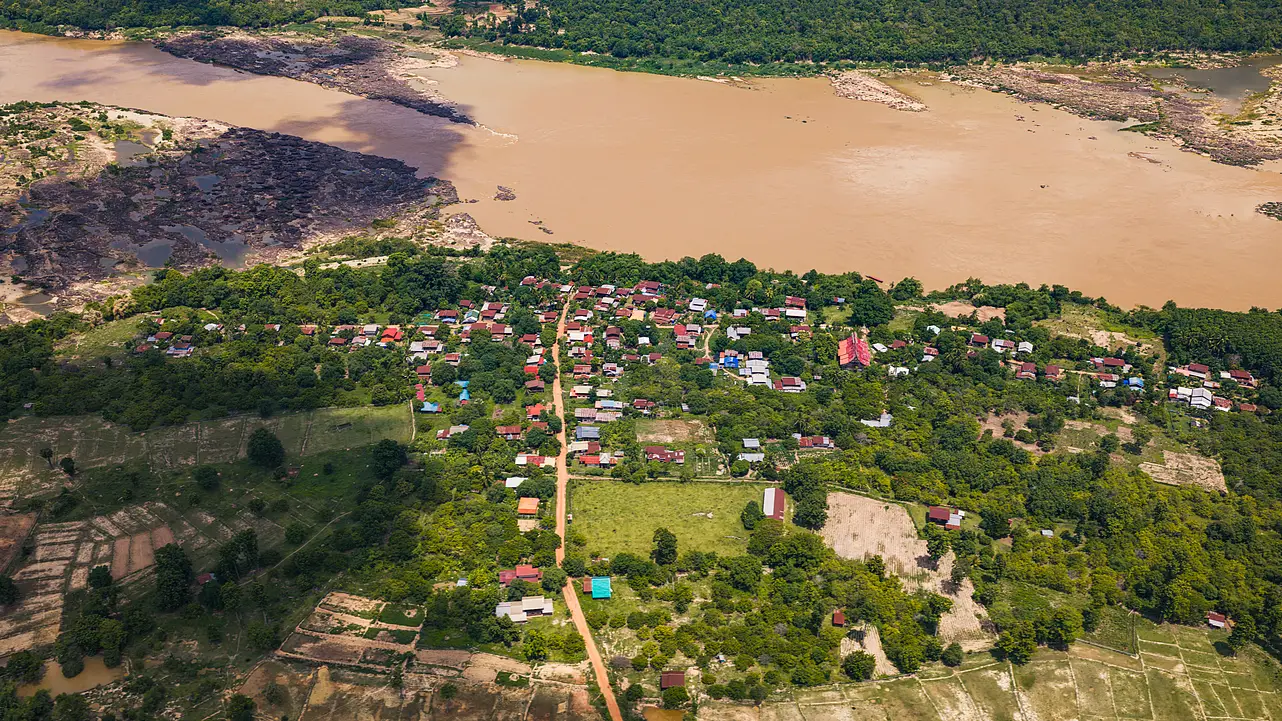
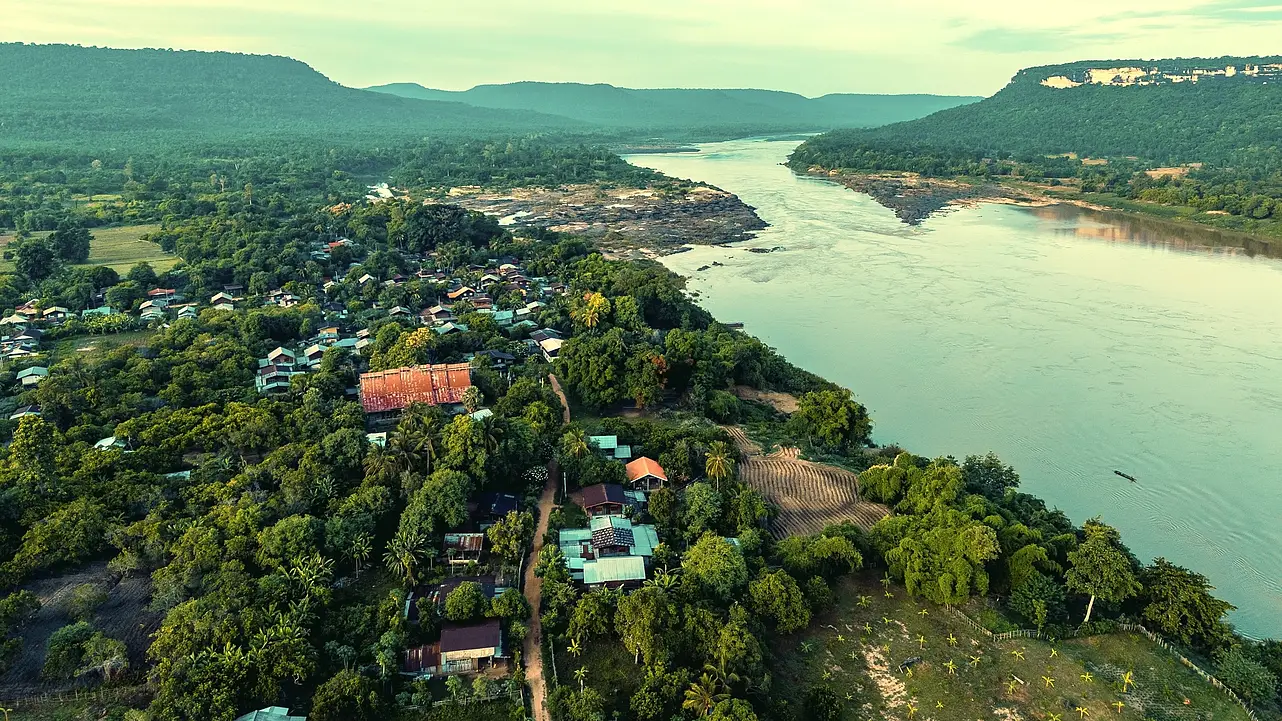
Since 2023, WWF-Laos and its local partner have supported seven villages along the Mekong near Phou Xieng Thong National Protected Area to strengthen sustainable fisheries management and climate resilience. Support has included establishing Fish Conservation Zones and village patrol teams to help protect fish habitats, prevent illegal fishing, and ensure that protected zones are respected.
A fisheries survey and fish catch monitoring supported by WWF-Laos in 2024 recorded at least 120 fish species in this stretch of the Mekong River, highlighting its rich biodiversity and importance for fisheries conservation.
Khamtue is one of the villages supported through the project, where community members have taken an active role in caring for the river and forests they depend on. For Ms. Khan, that shared commitment has become a personal responsibility.
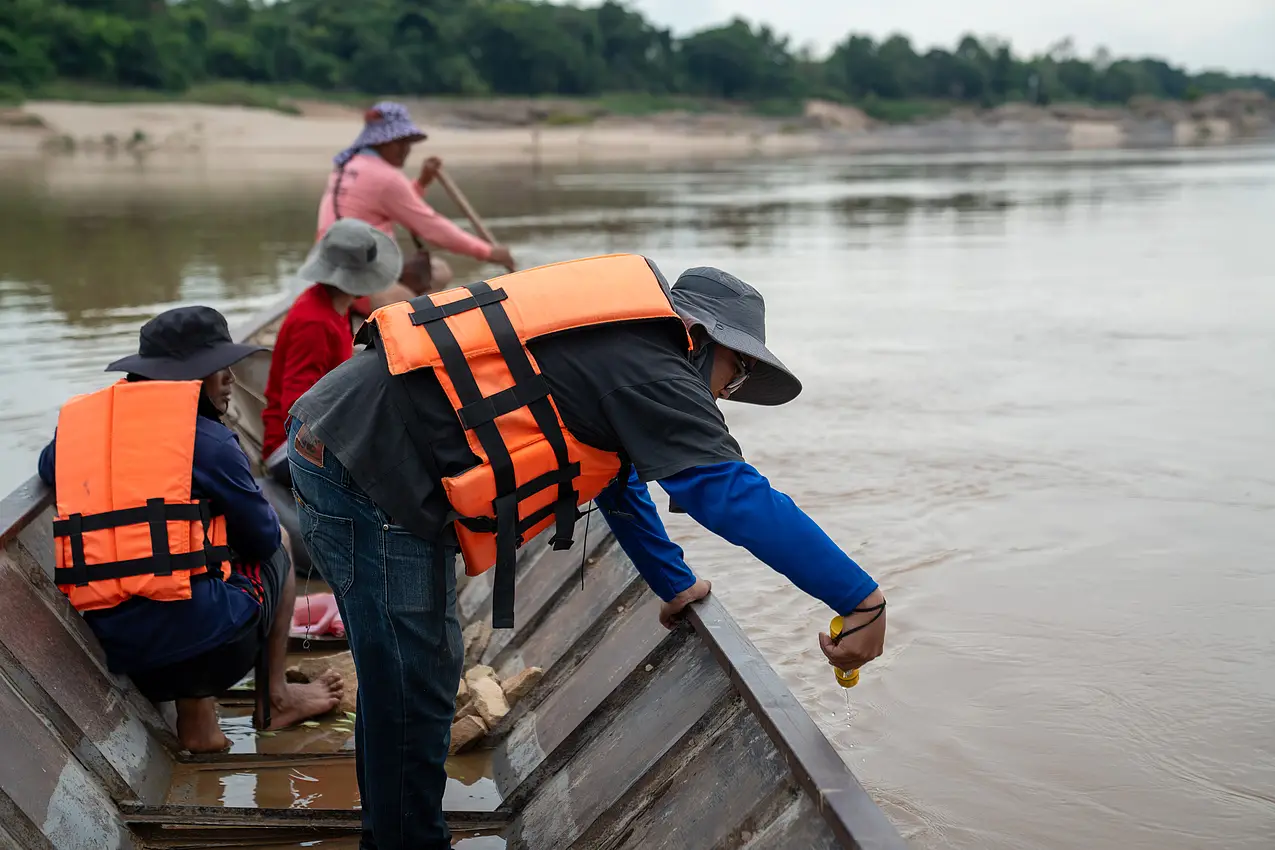
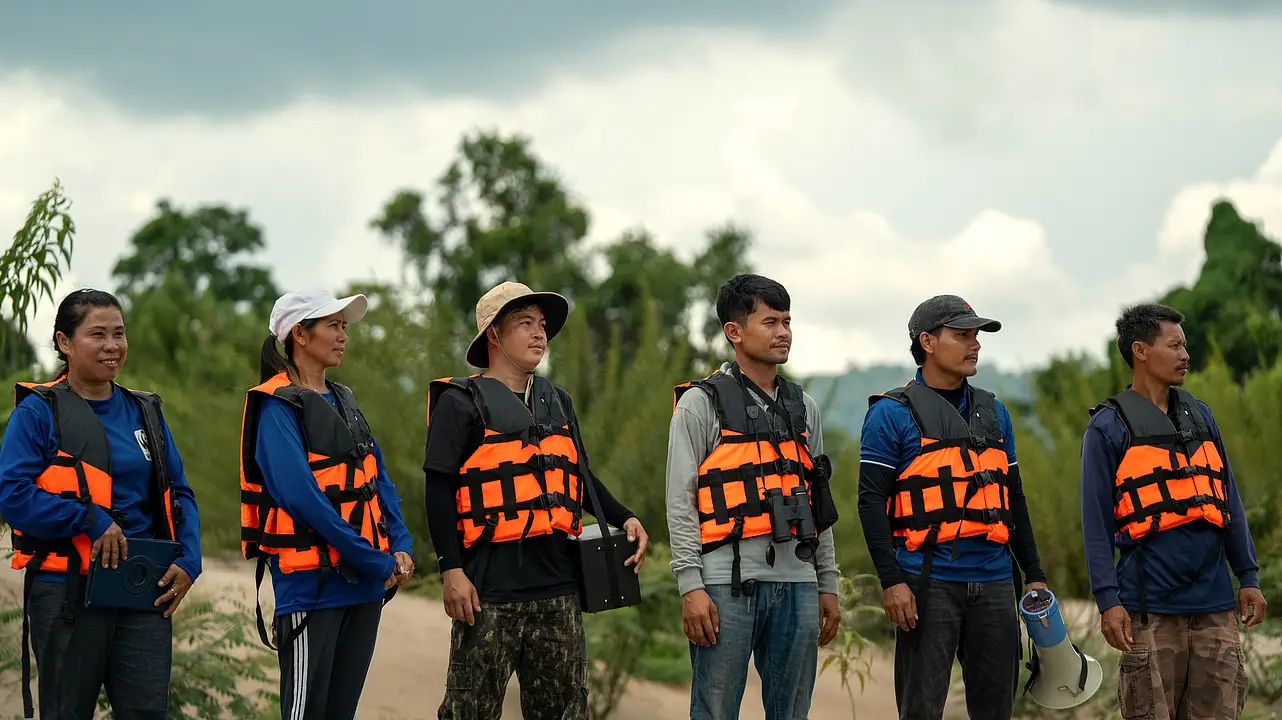
As one of just two women on Khamtue’s river patrol team, her role shows that protecting the river is not only men’s responsibility. By joining patrols and helping care for the Fish Conservation Zone, she is also helping protect these resources for her children and future generations.
The nine-member team was selected by the community and received training on patrol guidelines, safety and the use of patrol tools and equipment. Members also receive a small financial incentive in recognition of the time and effort they contribute.
Her role as deputy patrol leader has helped Ms. Khan build confidence. Through exchange visits to other districts and provinces, she learned how other communities manage Fish Conservation Zones, patrols and local fisheries management.
Her husband supports her involvement in patrols, meetings and exchange visits by helping with household and family responsibilities when she is away. Her children are also growing up seeing their mother take an active role in protecting the river that supports their family.
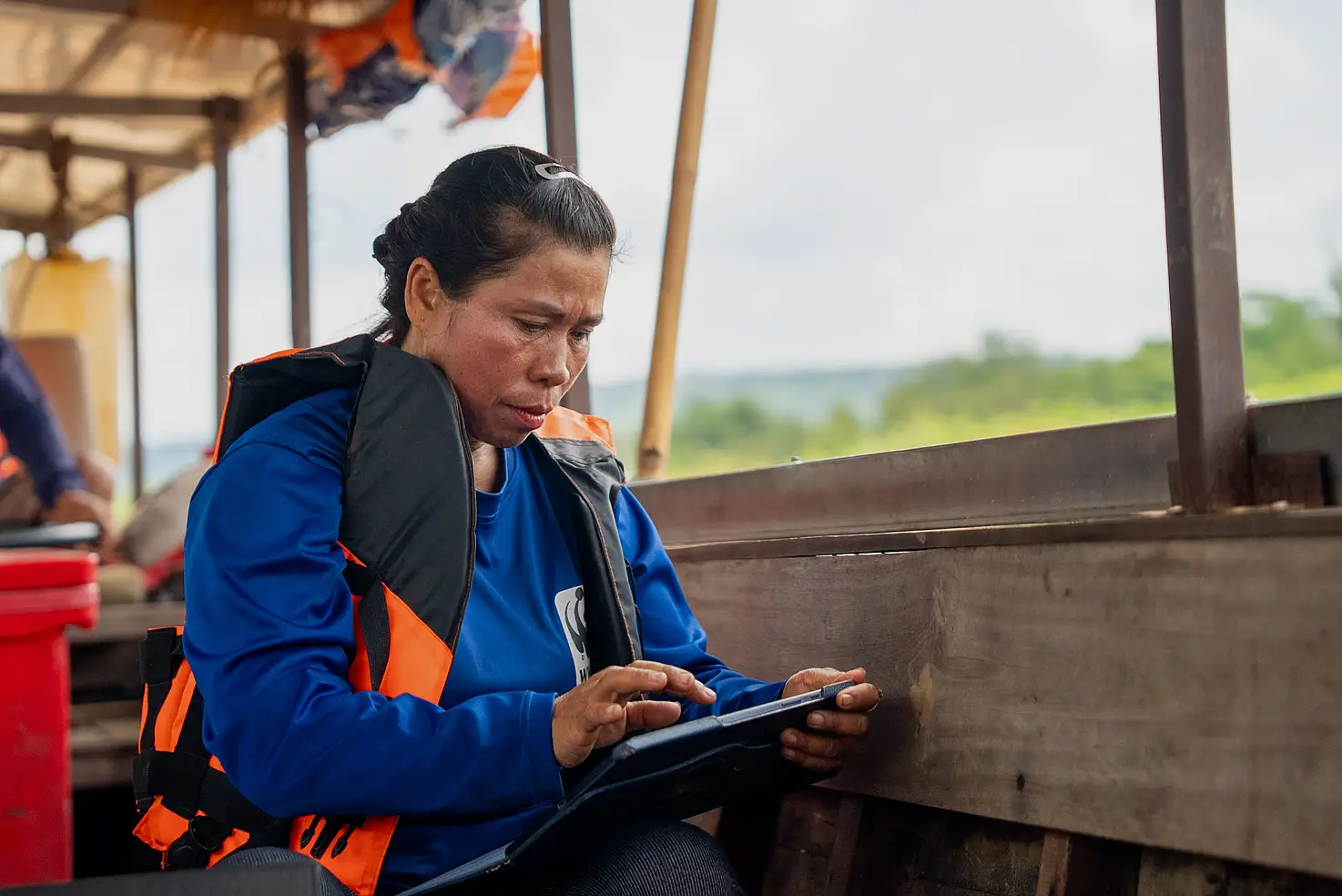
“My children are happy to see me in my patrol uniform,” Ms. Khan said.
As deputy patrol leader, she helps organise patrols, joins site checks and encourages community members to respect fisheries laws and Fish Conservation Zone regulations that protect fish habitats and nearby natural resources.
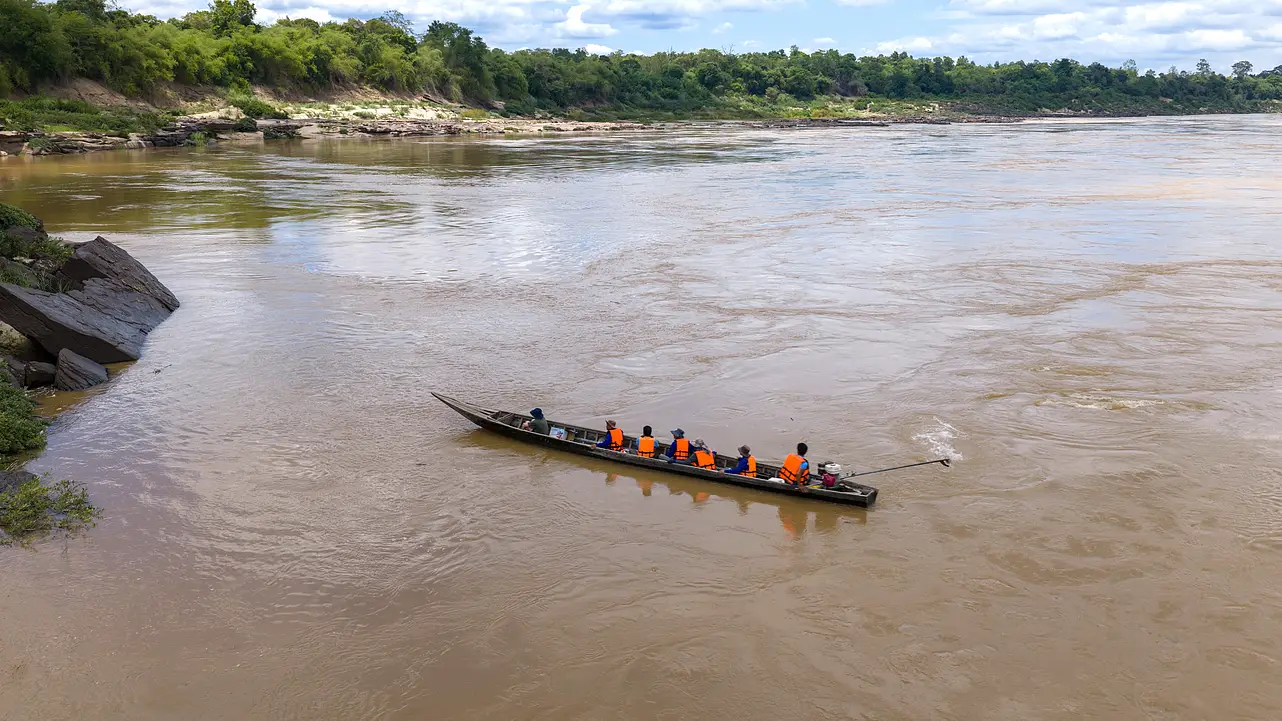
Patrols take place at least twice a week, but the team may go out more often when there are reports of illegal fishing or other concerns. Depending on the situation, patrols may take place during the day or at night. Along the river, the team safeguards the Fish Conservation Zone, watches for illegal fishing and reminds people of the community rules designed to protect the area.
The Fish Conservation Zone is not far from Ms. Khan’s home and covers around 20 hectares, making it the largest of the seven Fish Conservation Zones established across the project’s seven villages. It also represents something much bigger: a shared effort to help fish populations recover and ensure that future generations can continue to benefit from the Mekong.
“If we depend too heavily on fishing and do not care for the Fish Conservation Zone, there may be less for our children in the future. I am very happy to be part of this work because it helps protect the river for the future of our community.”
“Some fishers in the village are now able to catch more fish, and I believe this is also one of the benefits of the Fish Conservation Zone,” she said. “It shows why we need to keep protecting it.”
Like many households in Khamtue, Ms. Khan’s family depends on several sources of food and income throughout the year, including agriculture, livestock raising, fishing and forest resources.
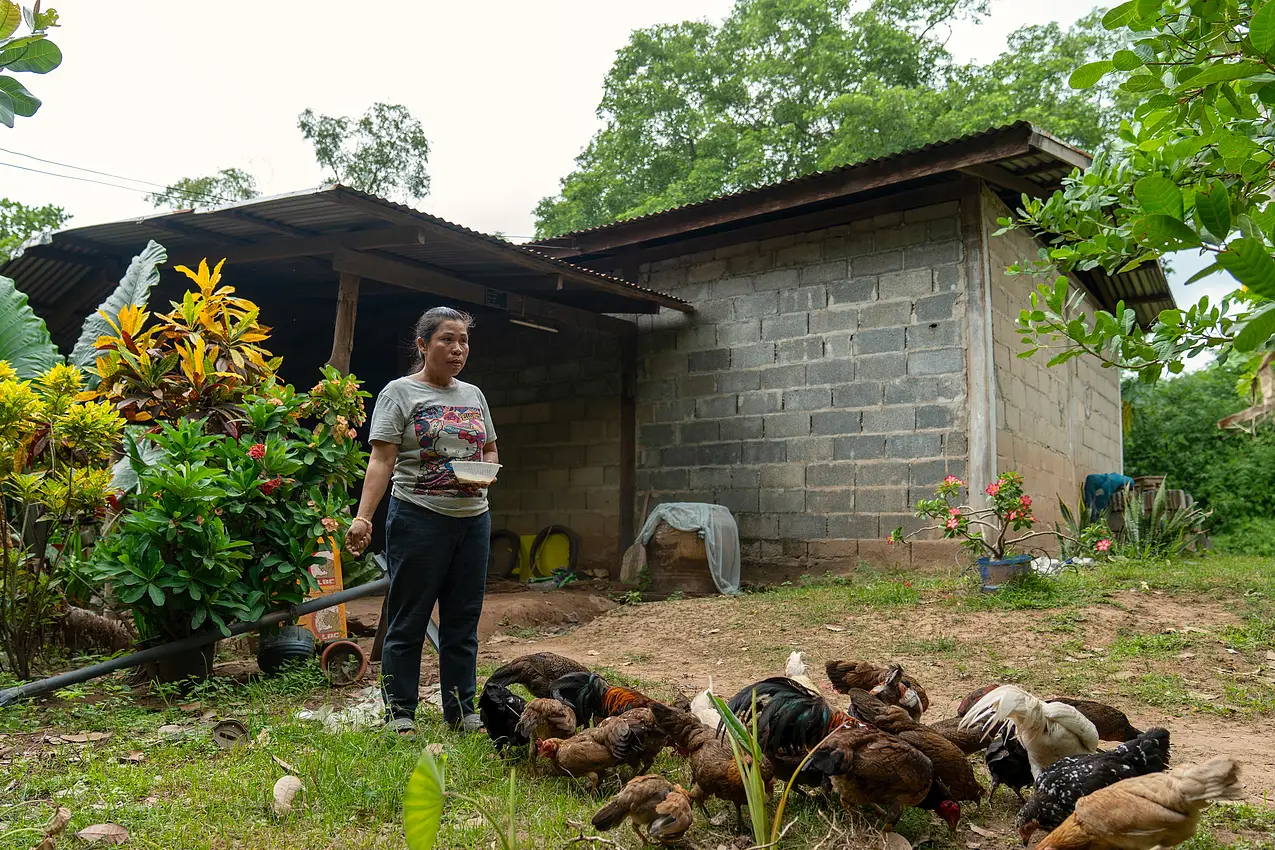
Through the project, Ms. Khan received support for raising chickens and ducks, including practical training, basic equipment and guidance on improved farming practices. This provides food for her family and a small additional source of income when crops, fishing or other work are less reliable.
This support has become increasingly important as the weather becomes more unpredictable, with hotter temperatures, dry periods and heavy rainfall affecting daily life.
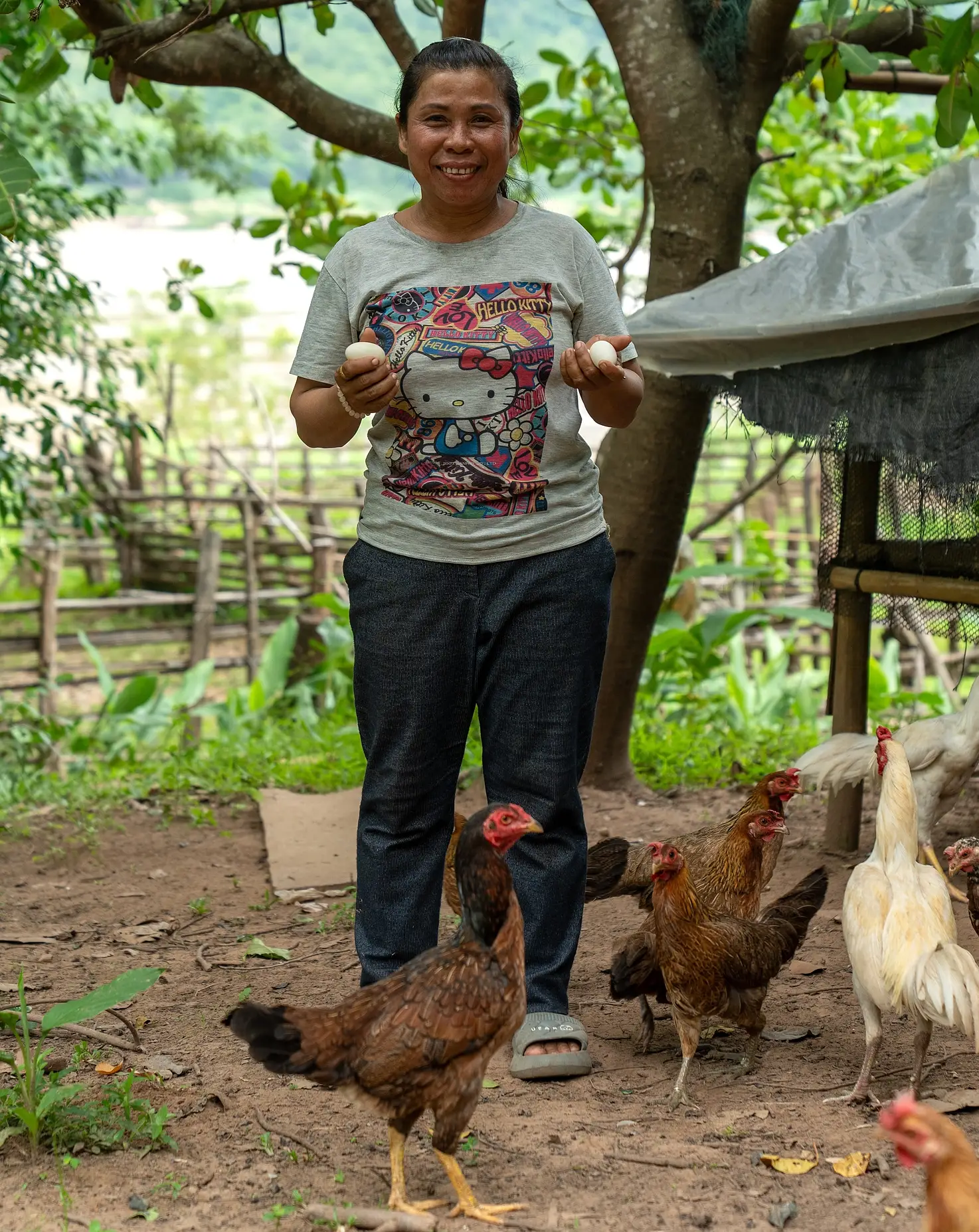
“It affects our farming, our animals and the natural resources we depend on. We still need food and some income.”
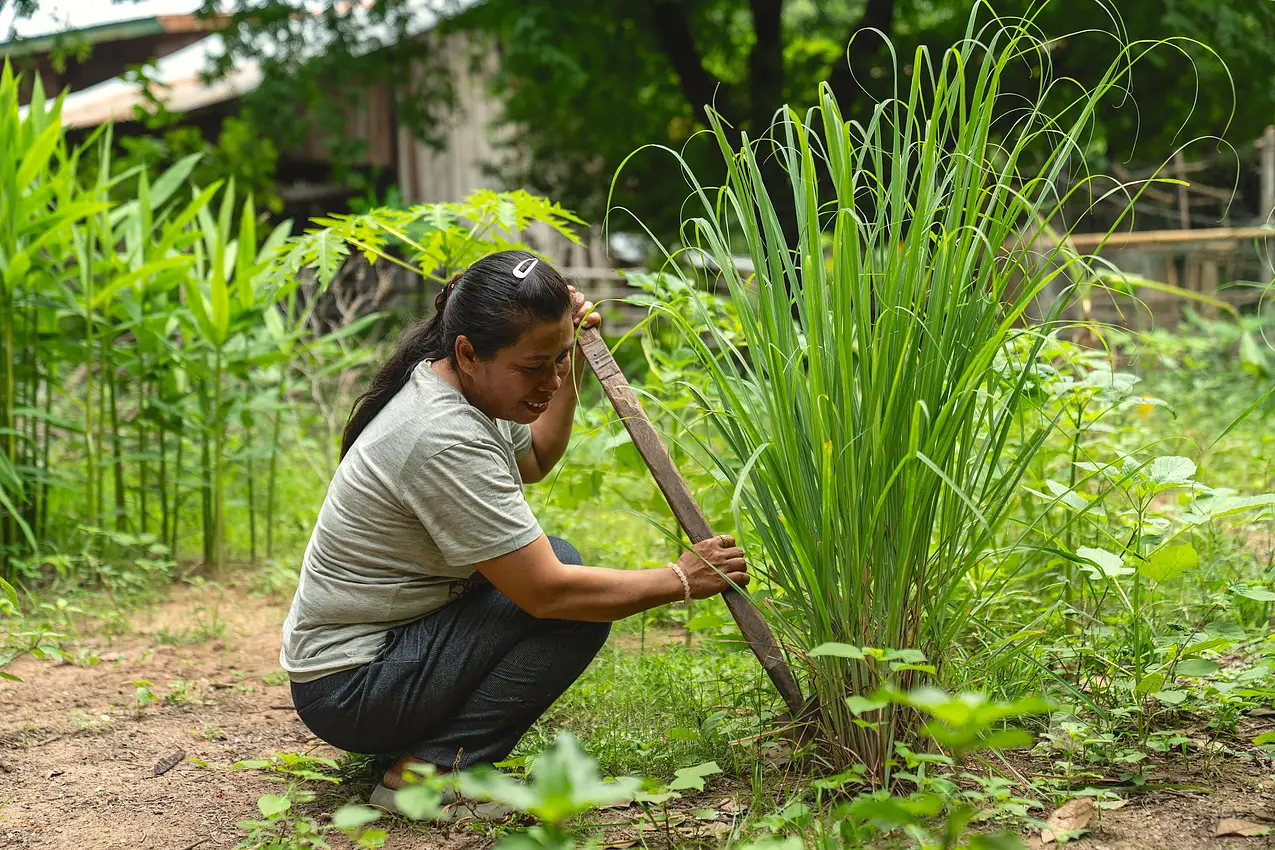
Having more livelihood options means her family is less dependent on any single source of food or income. It can also help reduce pressure on the river and forests that continue to support the community.
Freshwater conservation has been a core part of WWF-Laos’ work for more than two decades, supporting communities and healthy river systems across several provinces. In the seven villages along the Mekong near Phou Xieng Thong National Protected Area, this work is supported by WWF-Switzerland and implemented by WWF-Laos in partnership with the Department of Livestock and Fisheries, provincial and district authorities, and local communities.
Across Lao PDR, there are more than 1,000 Fish Conservation Zones helping to protect fish habitats and support sustainable fisheries. Over the past two decades, WWF-Laos has supported the establishment of around 320 of these zones, including seven in Phou Xieng Thong area.
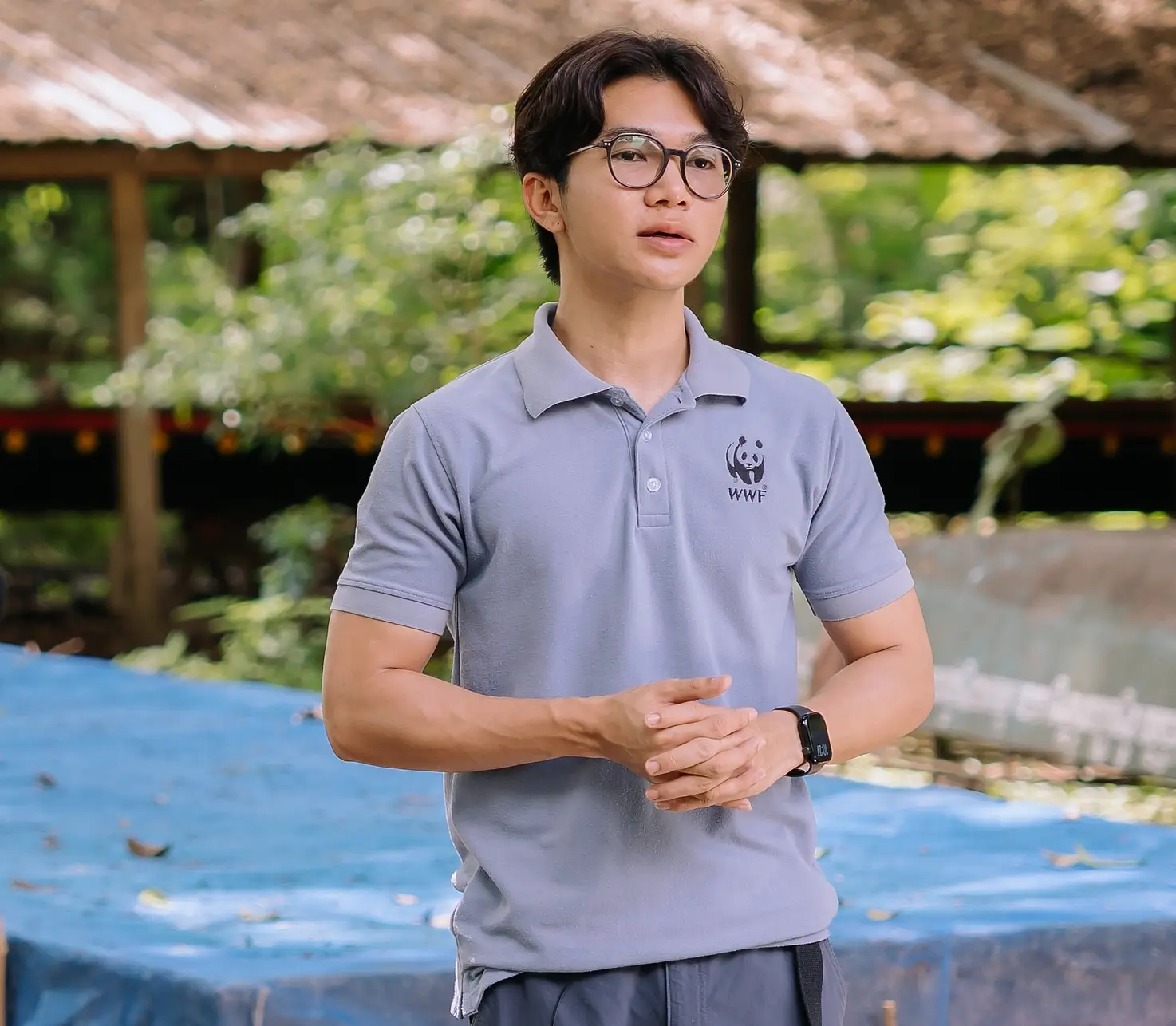
Beyond supporting communities to protect Fish Conservation Zones and promote sustainable fisheries, the project also helps households diversify their livelihoods and strengthen their resilience to a changing climate.
Souksavath Sikhounmeuang, Project Manager at WWF-Laos, who oversees freshwater conservation activities around Phou Xieng Thong National Protected Area, shared: